

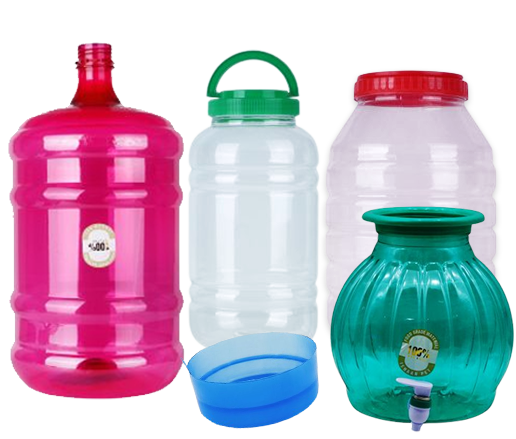
PET container have gained popularity and are a preferred packaging choice in the food, beverage, pharmaceutical, and personal care industries. Their lightweight, durable, practical design and clear visibility of the product inside make PET containers a popular choice in these industries. Mostly made of polyethylene terephthalate (PET), these containers offer a reliable way to package and transport products without the excessive weight of traditional glass packaging.
However, many industries face the dilemma of keeping PET containers lightweight while maintaining strength. The solution lies in polymer science. PET containers are processed and engineered to keep them lightweight. PET container manufacturers are adopting different technologies to improve production.
What makes PET containers light yet strong?
PET is a thermoplastic polymer known for its strength-to-weight ratio. Other features include impact resistance and transparency. These properties make PET containers suitable for packaging solutions such as bottles, jars, and other formats.
What role does polymer structure play?
PET containers have long molecular chains that make them durable and sturdy. During manufacturing, controlled processing is used to align these chains and develop the properties that make the containers durable and strong. Controlled processing helps make containers flexible, stiff, and durable.
These containers also offer good dimensional stability, allowing them to retain their shape.
Use of less material without compromising performance
Lightweighting is an important engineering goal for PET packaging. As a result, manufacturers reduce the amount of plastic used in these containers. Manufacturers generally achieve this through careful material distribution and by optimising wall thickness.
This approach reduces the raw material required per unit, making PET containers lightweight.
What is the engineering process behind PET containers?
Injection moulding and stretch blow moulding
Most of the PET bottles are manufactured using injection moulding, which is followed by stretch blow moulding. The process is simple: the PET resin is formed into a preform with a controlled shape. The manufacturer then heats the preform, stretches it, and uses compressed air to expand it inside a mould.
The stretching process helps to orient the polymer chains and improve the durability of the PET containers. The mould determines the container’s final dimensions, shape, and design.
Smart design and material distribution
With carefully designed ribs, curved surfaces, and reinforced bases, the load is distributed evenly throughout the PET container, making it lightweight. As a result, the container’s shape and geometry play a key role in improving its strength.
Engineers also pay close attention to wall thickness, grip, compatibility, and resistance to deformation during manufacturing.
The strength of PET containers is derived from the interaction between polymer science, a controlled manufacturing process, and intelligently distributed design. By combining the strength-to-weight ratio and effective material distribution, durability is ensured in PET containers without compromising quality.
Looking for a reliable and renowned PET containers manufacturer? Harsh Impex and Ishaan Plastics offer packaging solutions designed to meet diverse business requirements. Explore quality PET containers suitable for various applications, with a focus on durability, functionality, and dependable service. Visit Harsh Pet to explore its product range and discuss your packaging needs with the team.
